

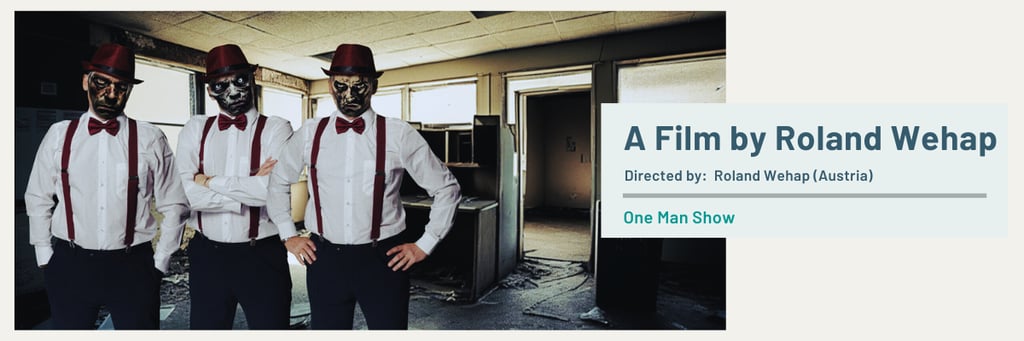
A Film by Roland Wehap
Synopsis
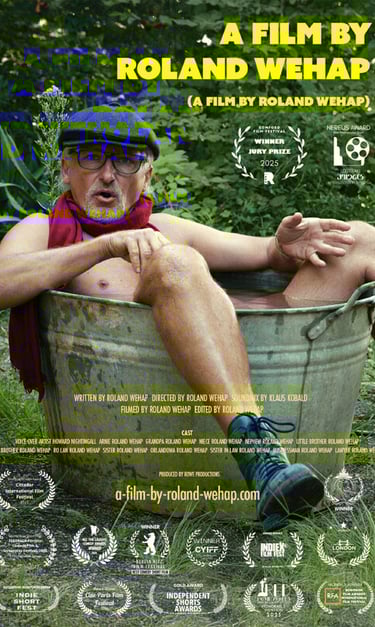
The film "A Film by Roland Wehap" is a work by the filmmaker of the same name, Roland Wehap, who, as a "one-man show filmmaker," challenges the concept itself by embarking on an extraordinary experiment: Is it possible to produce a short film with almost no budget entirely on your own?
In this ultimate "one-man show," fiction and autobiographical elements merge into a biting satire about an uncompromising filmmaker. Driven by his relentless quest for fame, recognition, and the big breakthrough, he navigates the typical stages of a film career riddled with setbacks.
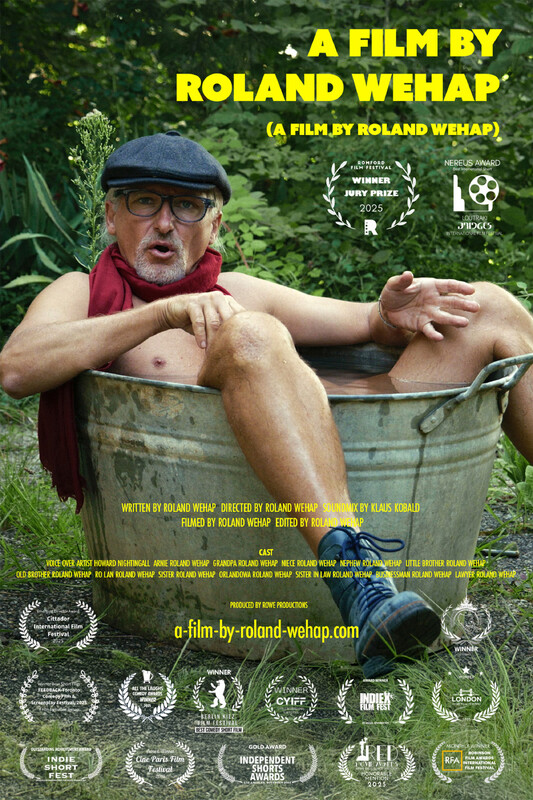
A Film by Roland Wehap is a 29-minute Austrian short which fulfils its brazen title in its entirety, it is, rather plainly, and just about purely, a film by Roland Wehap. Written, directed, shot, edited, produced and acted by the same 58-year-old Graz-based documentary veteran, the project began with a challenge to himself, can a fictional story be made surviving as a real one-man show with an extremely tight budget of virtually zero dollars? What it yields, in the result, is one of the most cutting, humorous, and unto be contemplated surprises of half-cinema upon themselves.
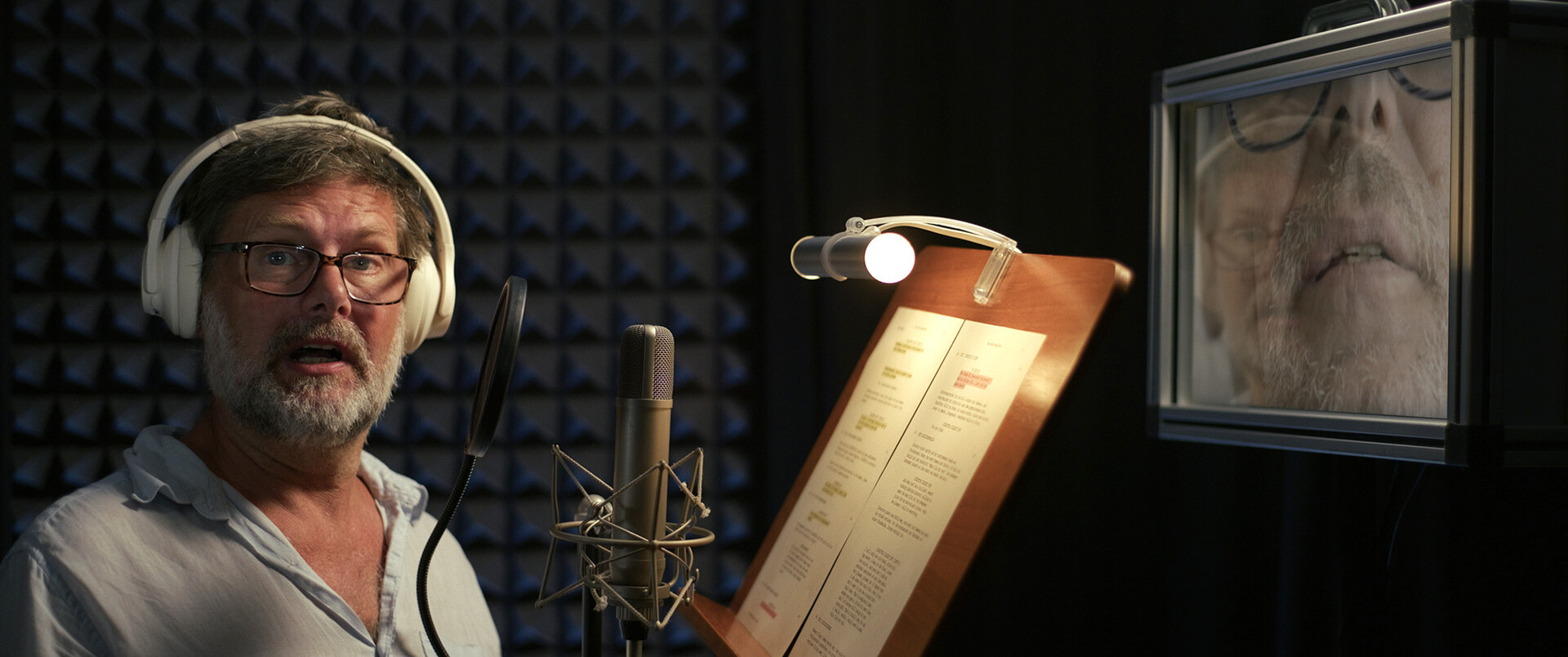
Already in the first few seconds the film declares its meta intentions with lobular euphoria. A drone shot of a car moving at breakneck speed along an alpine road is filled with bombastic stock music, until the spirit is dampened by a deliberately misplaced, jaded British voice-over (the magnificent Howard Nightingall, the only major collaborator): Here he comes... Roland Wehap, genius filmmaker... 15-year-old car driver. The illusion is disillusioned before it takes shape. Since that time, Wehap continues kicking the fourth wall until it falls.
Directed by
Roland Wehap
Roland Wehap
Written by
Cast
Roland Wehap, Howard Nightingall
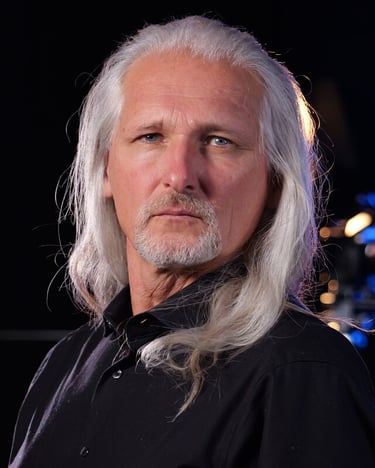
Roland Wehap
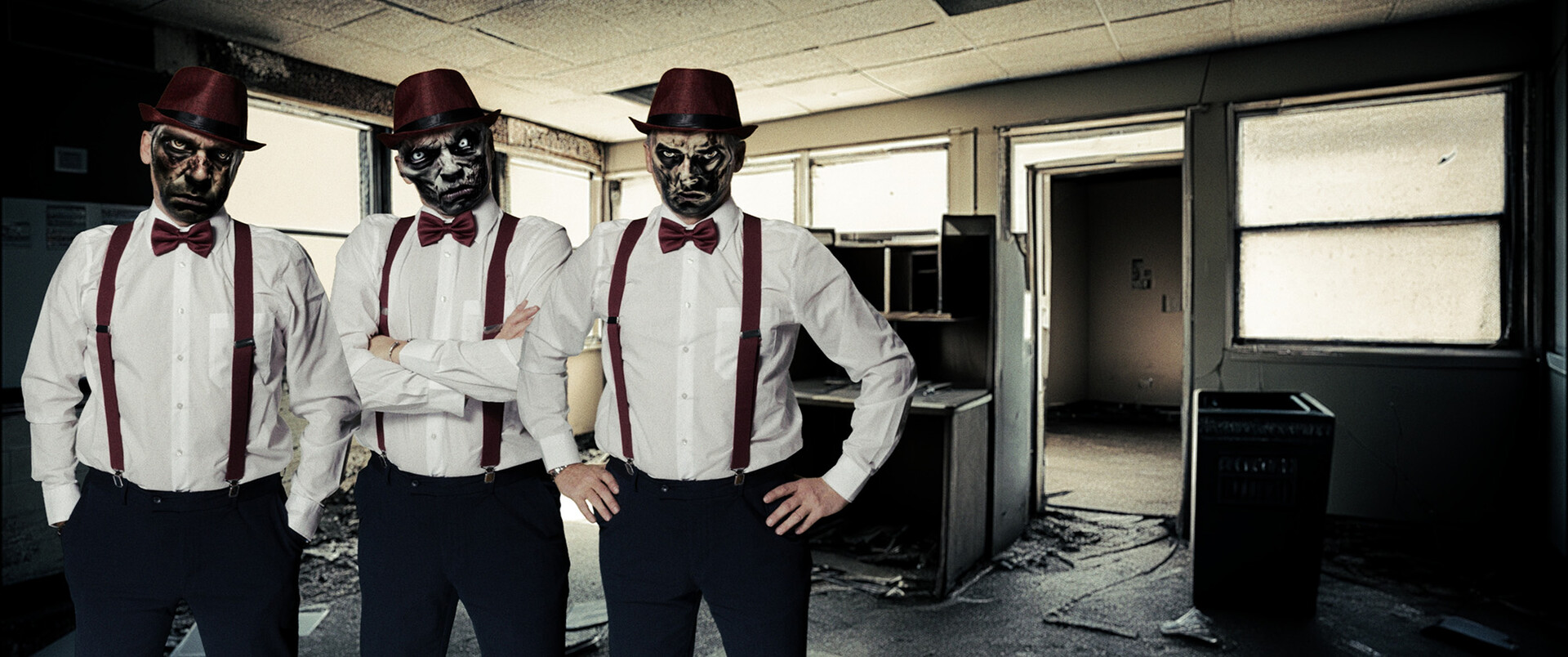
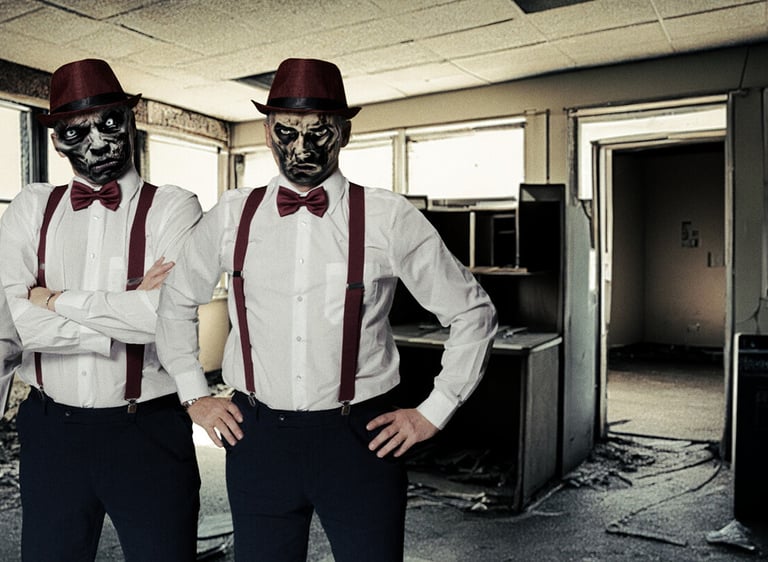
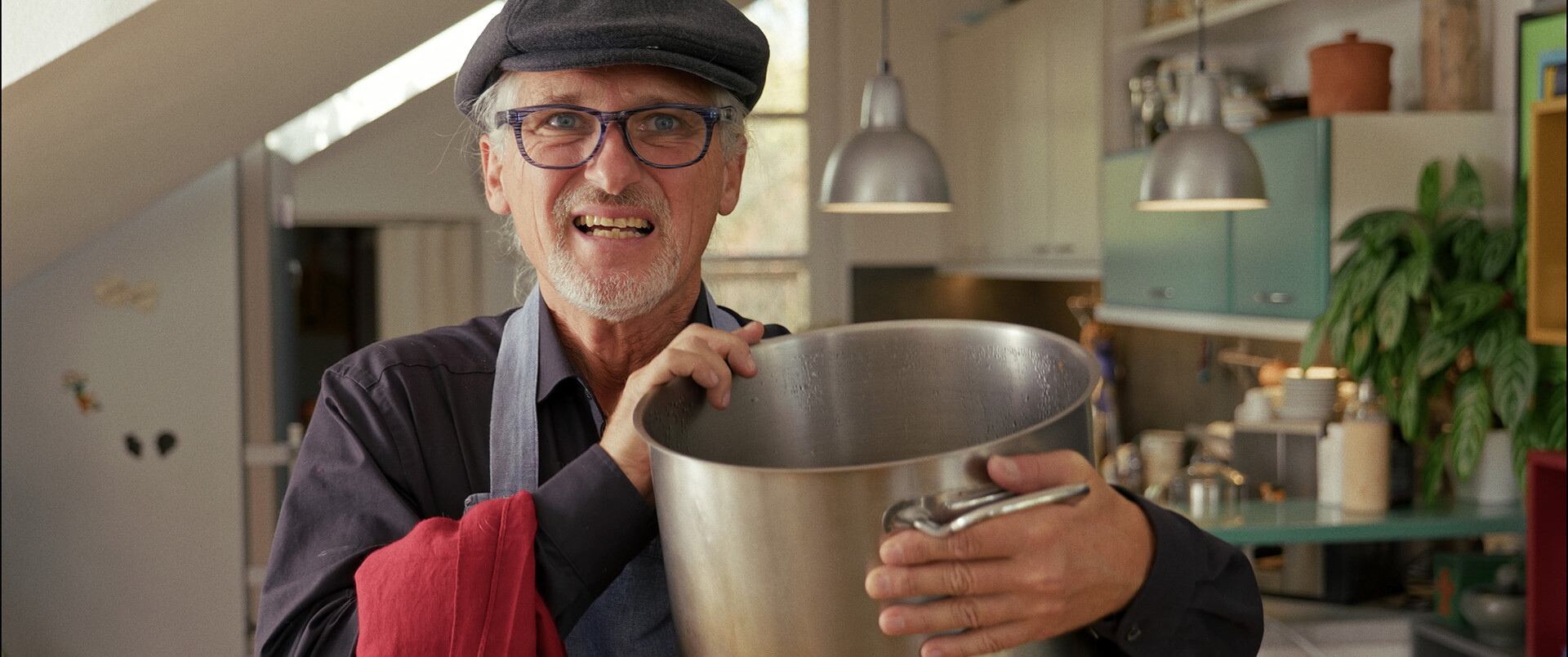
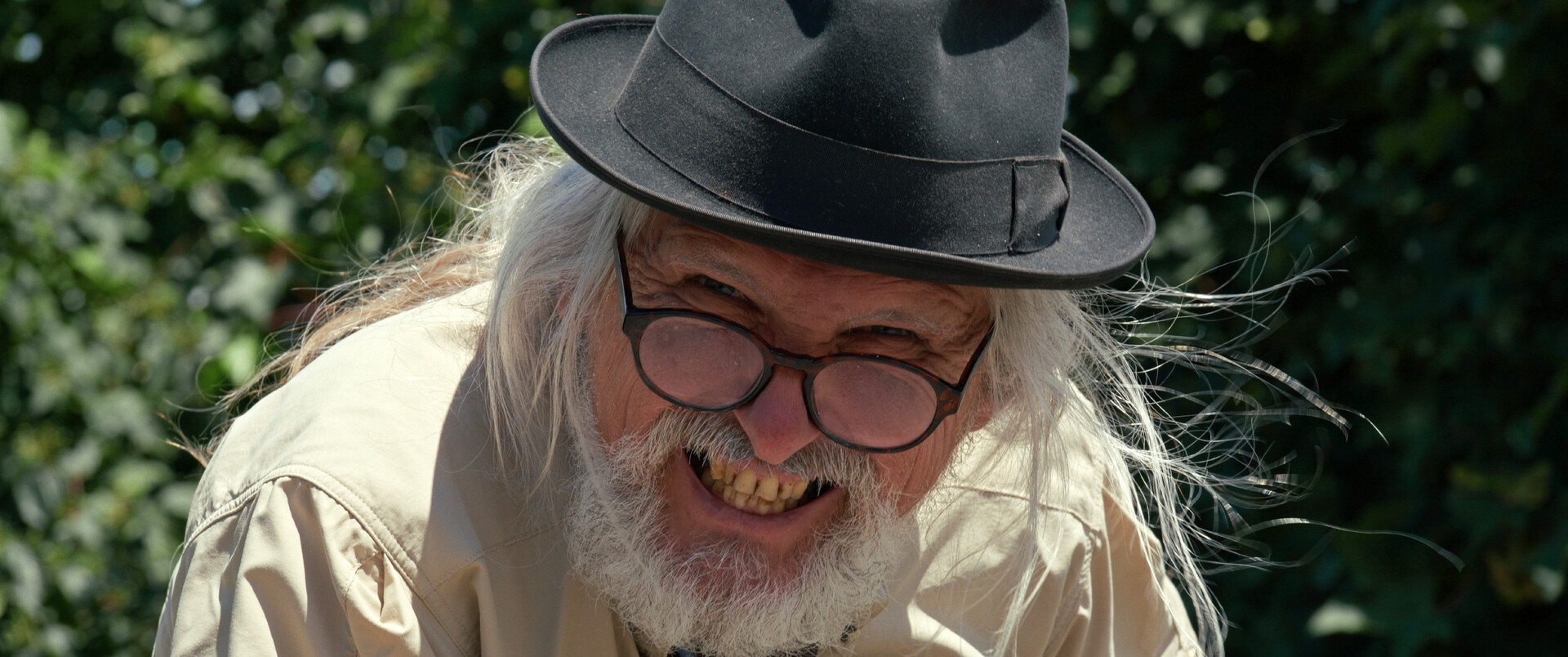
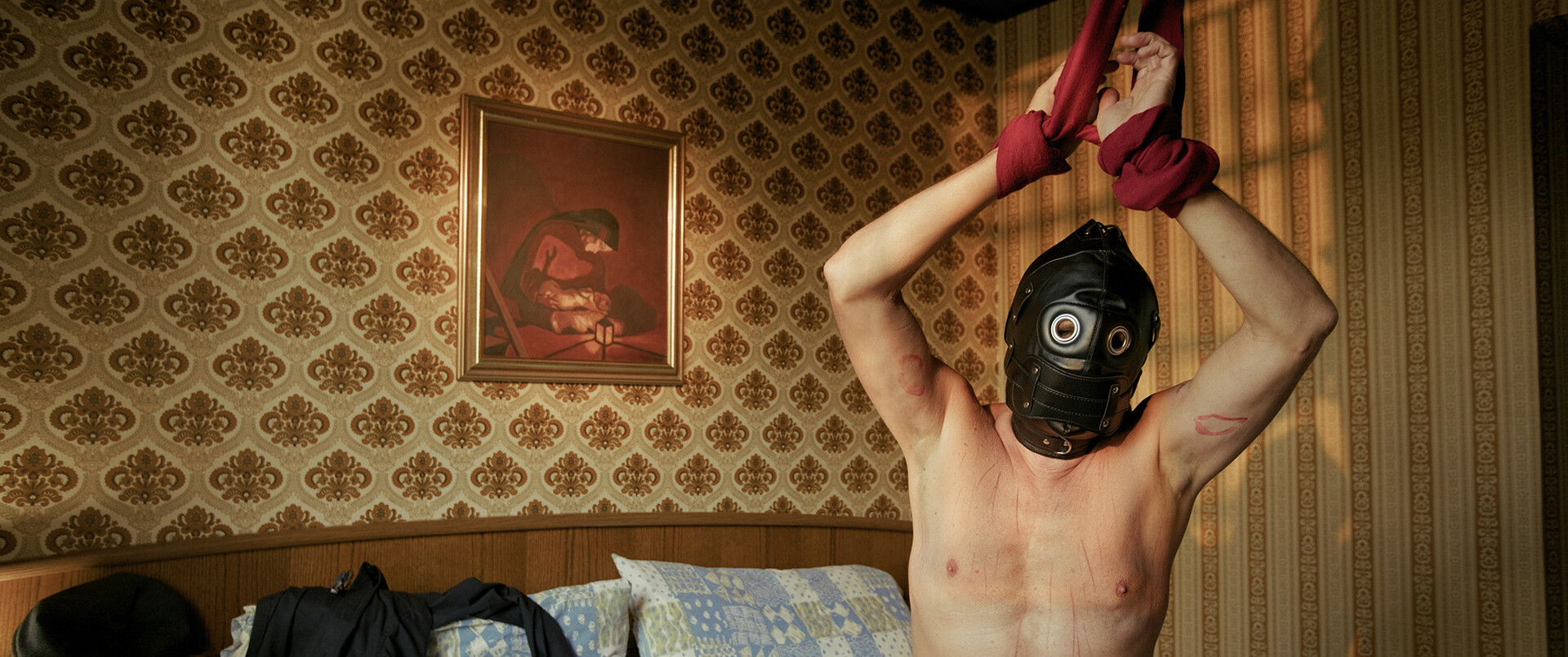
Here we have a mock-biographical satire, which is more likely to be a stand-up routine shot on the motion-picture cameras than it is a traditional short story. Wehap is an extreme portrayal of himself: a heavy metaled, half-delusional lone film-maker who has been living a life of thirty-five years making documentaries on cacao farmers, displaced Burmese citizens, and chocolate production plants all in this dream of the big screen glory. Funding bodies ignore him. Festivals issue nice rejection letters. He creates his own festival, films his sleeping cat, which oddly goes viral, a kind of art movie of his own, and briefly, it makes him feel like a surreal champagne of notoriety before being pulled back to earth by reality (and his empty bank account) all the same.
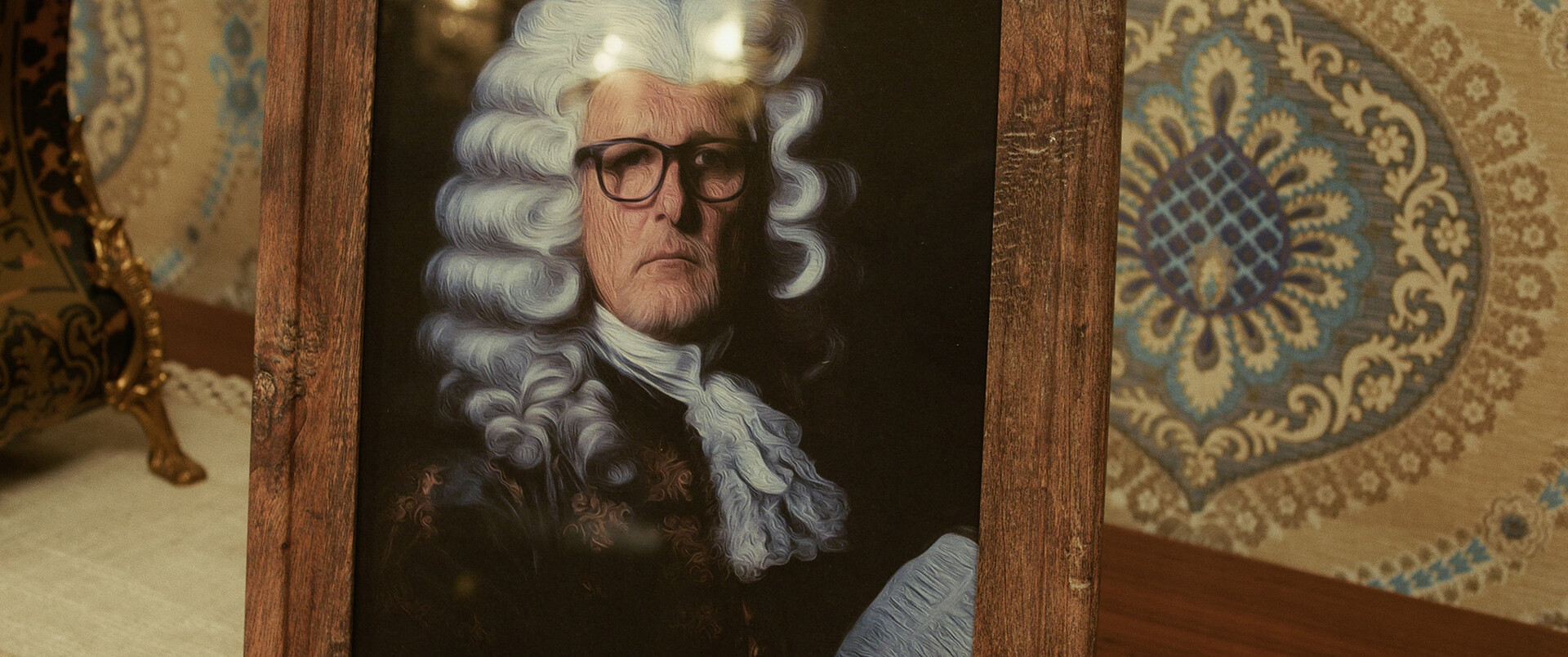
The brilliance of the movie is in its ability to weaponize its limitations with the deceptive honesty. Since Wehap actually is doing all that on his own, all the restrictions can serve as the joke at his own cost. To get a crowd he will film himself dozens of times and mix the shots. In cases when he requires alternative faces, he calls on lightweight A.I. face-swapping that is only persuasive enough to be uncanny and not convincing enough to be laughable. As soon as he requires an interviewer, a journalist, a festival director, the same somewhat deformed Wehap-face is observed with hair and various accents. It has the effect of a hall-of-mirrors that is an ideal reflection of the narcissist echo-chamber of the struggling artist.
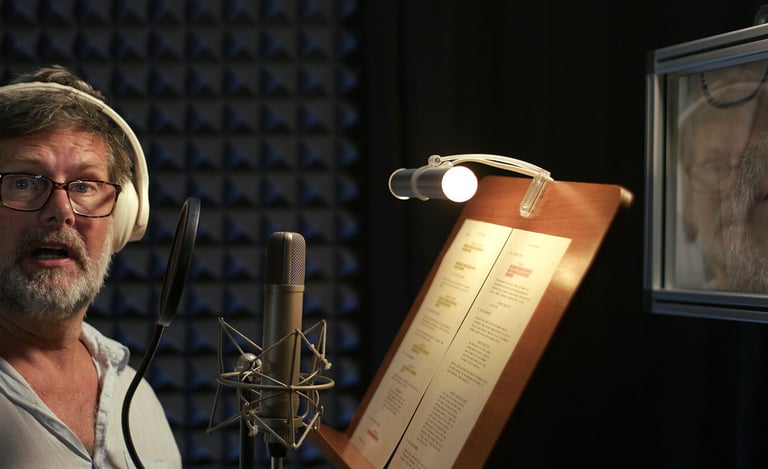
The secret MVP is the voice-over of Howard Nightingall. He is dry, absolutely timed, almost dripping with affectionate sarcasm, the story-teller and the Jiminy Cricket who continually tells “Roland” how ridiculous he appears to the outside world. There are the lip-sync scenes when Wehap silently mouths the words of Nightingale an invaluable comedy gold, a running joke, which somehow gets old judiciously as it keeps reminding us that even the voice of the main character does not belong to him. In a movie about artistic independence at the extreme, the one aspect he leaves to a subcontract is his voice. The irony is delicious.
The movie itself is visually way above its budgetary weight category. Wehap, his own cinematography on dozens of his often-shafted documentaries, in turn, provides the absurdity with a clean, nearly classical eye. Beautiful Carinthian sceneries, golden-hour shots, perfect camera sweeps, all these looks costly till the movie itself makes you recall that it was filmed at the cost comparable to a used moped. It is true beauty in the contradiction itself: the pictures strive to perfection but the text almost issues with delight in shredding the very idea of the fact that the grandeur must have money.
Behind the laughs one can feel the real melancholy. Wehap is too old a hand and too knowledgeable of himself to muster the tortured-genius card. Rather, he reveals the desperate silence of the eternally indie film director: realizing that each new project could be the final one, the compulsion to the art of creating despite the fact that the world may not care at all, the zany lengths to which one can go just to keep the dream alive on life support. Leaving aside any real awards that are gained by this same movie at actual film festivals (Romford, Loutraki), the success thereof is vindictive as well as empty after we have just spent a half-hour watching the random and senseless nature of the real successes it takes.
Eventually A film by Roland Wehap finds a beyond simple and obstinate manifesto: a filmmaker must film, come what the cost: the cost may be his time, his money, his dignity, and in this instance his own face with hundreds of disillusioned clones of himself. Such an email might have been emotional. It turns rebellious, comical and strangely motivating in the hands of Wehap.
Is it flawless? No. Two of the jokes have a bit of a lengthy pursuit and the A.I. voices sometimes veer towards witty verge of creepy. It is a movie that is proudly displaying its scars just like its new jury awards.

2025, Austria, 29 min
Roland Wehap
Produced by

This Film by Roland Wehap is a must watch, to any individual who has ever pecked on export on a project, which no one has requested. It is the day off of the no-budget generation, the middle finger that is a love letter to a movie, and an indication that there are occasions when the cleanest creative manifesto is to pick the camera up and turn the camera to self and press record, one person, no money and laughing through the panic.
Roland Wehap did not produce a film in brief. He made a mirror. And all independent filmmaker viewers will see the face who are staring at them.
Ashraf Shishir
Luminous Frames and Emmy Awards juror.
© 2026. All rights reserved.